


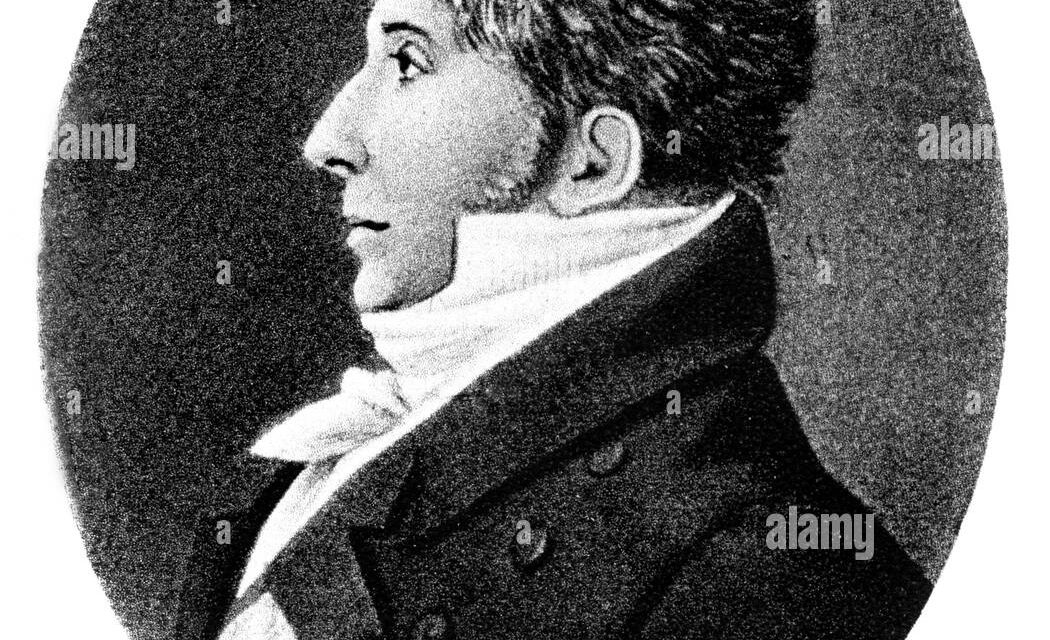
To search the press groups, associations, businessmen, sponsor for the site ” News-art-culture.com”. When listen Lesueur you enter in sacred music crossing the orators into religious intimate; his music seduces him changing French style, modeling the rhythm with harmony. His concept, of music don’t stop in orators, he continues with dramatic works for to complect the artistic style with originality and talent. Can be the music without religiosity? Non, Lesueur proves!
Jean François Lesueur is birth to Drucat- Plessiel of 15 February 1760 and is dead at Paris on 6th October 1837 has been a French composer. Enters in music in quality by music religious and dramatic’ s composer transforming the style music in time of French revolution.
FAMILY, THE WAY ARTISTIC OF LESUEUR
His origins are in artistic line, being the nephew of painter Eustache Lesueur , a famous family with artistic traditions of where he takes the form in musical talent that brings him away , among musical notes seducing him. He starts as chorist at a religious College from Abbeville after that he continues the studies to Amiens. For a deep the studies he goes to Paris where study the harmony with abbe Nicolas Roze, master of choir at Saints – Innocentes. Later he enters in his element of composer artist, with function of master of chapel, composing and meditating in compositions , Lesueur relives in his artistic theories the philosophy’s music whether in sacred music , whether in drama in treaty “ Essai de musique sacrée ou musique …et métodique”. Can say a talent uncontestable! In full artistic maturity, followed him of big politic events to transfers at Champigny, a distant place, quiet away of bloody French revolution where he is dedicated at composition. He travels to London, and in 1793 year come back at Paris in time of revolution with three success of opera represented at Theatre Feydeau: La Caverne or (Le Repentir , Paul et Virgin, Triomphe) and Telemaque dans l’Île de Calypso ( La Triomphe de la Sagesse) . In time he becomes the inspector at the new Conservatory having and the commissions from studies and from writes from “Principes et elementaries de la musique”. Being an ambitious artist, rigorous in musical style he writes” Project d’un plans general de instruction musical en France”, a violent, polemic pamphlet attacking Conservatory and director for study method of that he loses all professional functions living in economic difficulty. For the music and talent, the emperor Napoleon Bonaparte chooses him as successor of Giovanni Paisiello , a role of chapel master at royal court. In same period the works: I Bardi, Ossian ou Les bardes come represented with the success in 1840 at National Opera from Paris together of François Lays and Jean Blaise martin. In the year 1814 is nominalized composer of court obtaining the function of professor of composition at Conservatory and member at Academy. Among the compositions he is notated with marches “Coronation of the Napoleon emperor “. Polemic, envious, scrupulous… at the end admired, lucky. Innovator, imposing, great changes the music French style anticipating the new melodrama and new orators ( Berlioz, Charles Gounod, Requiem de Verdi or orator of Wagner). Original in his music searches always total revelation, great associating the odes and cantates for to celebrate Revolution between big number of chorists and instrumentalists. He is dead at Paris on 6th October 1837.
LESUEUR’S MUSIC
3 Messes solennelles, 33 Messe, Oratori, Mottetti, Marșul pentru Împăratul Napoleon;
Orators: Ruth et Noemi, Ruth et Booz, Debbora, Rachel, Chant du premier vendémiaire, Le couronnement de Charles X…
Opera : La Caverne, Paul et Virgin, Télémaque, Ossian ou Les Bardes, L’Inauguration du temple de la victoire, Le triomphe de Trajan, Alexandre e Babylone….
For his artistic personality Lesueur leaves the glorious grandeur in odes, orators and opera. The style is more studied, philosophizing at new French music, changing the methods and sacred music theory. Wanting to be an innovator of French musical style he writes into kind more scrupulous, meditative a project of general plane for didactic education of music. Without the favorable thinks he to leave hate, in polemics continues to write the compositions that come finalized for the successes. The triumph is appreciate for the attention come from part of emperor Napoleon, his music to make hearing in odes, cantates, orators and opera. Great in style, he associates the voice at instrumental music for to complect the fundal into notable coloristic resonance of sounds. The French revolution pass in his music for the odes and cantates finalized with the marches Emperor Napoleon, a time that change more destines. Musical debut enters in orators is possible that the end is dominated of religiosity.


Recent Comments